Networking is an important form of relationship building. Meeting new people can help you in your future endeavors, whether they be career related or for your own personal interests. It’s important to start building your network early in your college career because it may help you find a new job, internship or other opportunities. Networking skills are built through practice by connecting with people you already know and reaching out to new people. The suggestions included in this guide provide guidance to students looking to network.
Jump to Sections
What Is Networking?
Networking = building relationships that help you learn, grow, and access opportunities. Networking builds social capital.
Social Capital = “an individual’s relationships and networks, and the benefits that can potentially accrue by virtue of those relationships” (Christensen Institute, 2025).
- Purposefully make and maintain connections relevant to your goals.
- Social capital can provide access to information, resources and opportunities.
- Connections can provide opportunities to bridge academics and career.
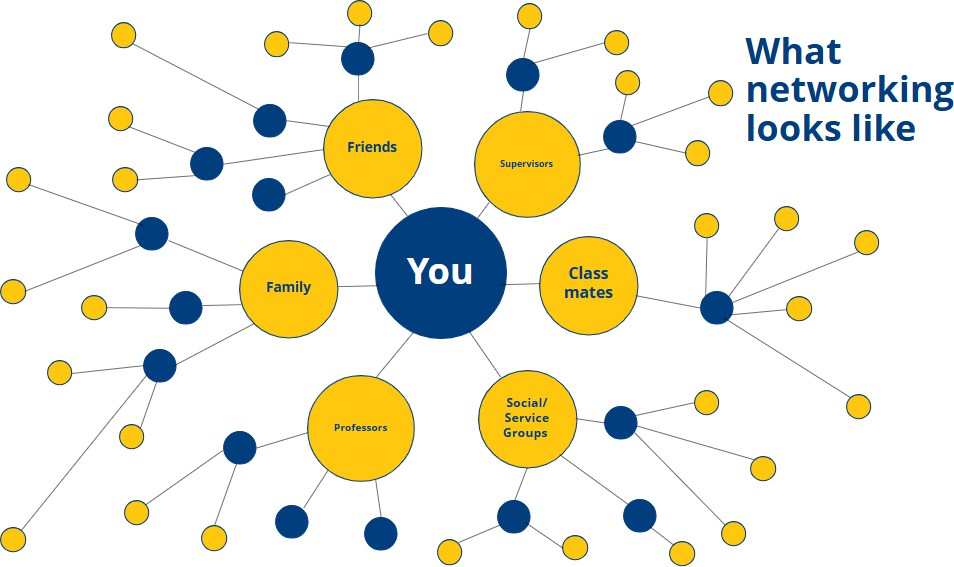
Why Networking and Social Capital Matters
- Social capital increases access to advice, exposure to new ideas, career opportunities and support.
- Many jobs are never posted publicly. Networking helps you tap into the hidden job market — the opportunities you hear about through people, not job boards.
- Employers sometimes hire through referrals.
- Your network helps you learn about fields, companies, and career paths.
- You meet people who can mentor, guide or inspire you.
Networking – When, Who, Where
Expand all | Collapse all
- Start making connections at the beginning of your college career.
- Use your academic breaks to catch up with friends and other connections you know, shadow professionals, or conduct some informational interviews.
- Find part-time work or internships.
- View every experience as an opportunity to connect and grow.
WHO: Start with people you know
- Parents
- Relatives
- Friends
- Neighbors
- Teachers/professors
- Religious/spiritual institutions
- Co-workers, past and present
- Supervisors, past and present
- Coaches
- Mentors
- Service club members
- Your dental hygienist
- Your stylist
- Alumni — After connecting with people you already know, seeking out Marquette alumni is a great next step.
WHERE: In-person or online
- A combination of in-person and online networking can be beneficial.
- You might maintain communication with your contacts synchronously (in-person meetings or video calls) or asynchronously (messages, emails or reactions to LinkedIn posts).
- For many examples of where Marquette University students and alumni might network, see the next section in this guide, Making a Networking Plan under "Locate Opportunities to Expand Your Network."
Making a Networking Plan
Expand all | Collapse all
- Identify what you want to learn about
- Prepare questions to launch the conversation
- Be prepared to answer questions about your interests and skills
- Identify what types of individuals you want in your network
3. Locate Opportunities to Expand Your Network
In-person:
- Career fairs (Log in to Handshake, tap Events and "Career fairs at your school.")
- Employer tabling
- Shadowing professionals
- Campus-wide events, panels
- Other on-campus networking opportunities, like those hosted by student organizations or departments
- Professional association meetings
- Conferences
- Chamber of Commerce
- Employee resource groups (ERGs), unions and labor councils
- Diederich Experience trips
- Selig - Jaffee Marquette Mentors
Online:
- Dress appropriately
- Be on time
- Use a firm handshake and smile
- Represent yourself strongly using your elevator pitch
- Ask for advice, not a job
- Instant results are unlikely
- Be persistent and polite
- Avoid getting discouraged
- Take a break if you get overwhelmed
- Send a thank you message
- Maintain connection over time
What to Bring
- Copies of your resume
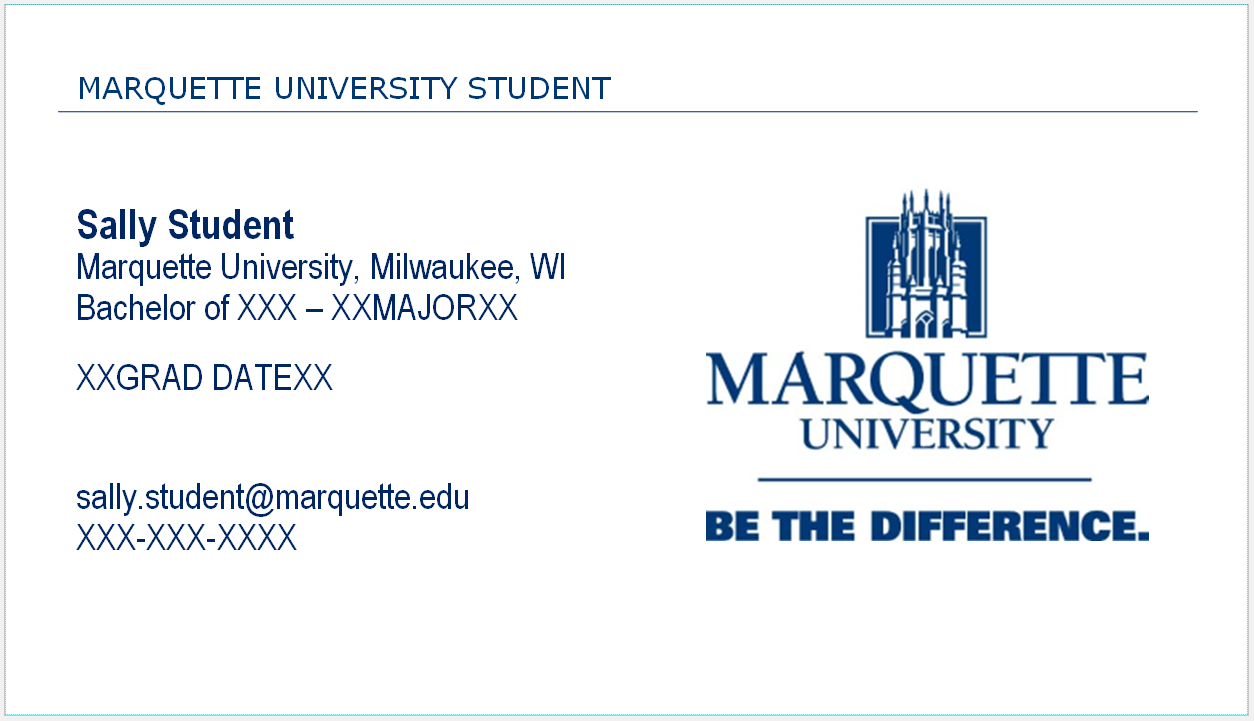
- Business cards: The Career Center offers 30 free business cards. Order online and please allow one week for your completed order.
- List of references
- Pen (at least two)
- Questions
- A good handshake, smile and positive attitude
Networking Method Highlights: Informational Interview and Elevator Pitch
Expand all | Collapse all
- 15-minute conversation with someone in a role, company, or field you are interested in.
- Offer multiple days and times you are available for ease of scheduling.
- You are asking for insight, not a job.
- Research the person; bring thoughtful questions.
- Show genuine interest.
Sample Reach-out
Dear Dr. Last Name,
I am a sophomore biomedical sciences major at Marquette exploring career paths in healthcare. I saw on LinkedIn that you also studied biomedical sciences at Marquette, and I’d love to hear how you chose psychiatry.
Would you be open to a 15-minute conversation next week Thursday or Friday, anytime between 12:00 p.m. and 3:00 p.m.?
Thank you for your time.
Sincerely,
First Name Last Name
A brief introduction that helps you confidently start conversations with professionals. Three parts: Present, Past, Future
- Where are you now? (Major, program, year)
- Where have you been? (Relevant experience, leadership, part-time jobs, etc.)
- Where are you going? (Career interests and/or goals)
Sample Elevator Pitch
“Hi, I’m Alex, a sophomore at Marquette studying Corporate Communication. I’ve built leadership and organizational skills as Vice President of the College of Communication Student Council, and I’ve gained customer service experience working at the Annex. I’m looking for a public relations internship next summer.”
If at a career fair, you could add an explicit question or statement to conclude your elevator pitch, tied to your objective: “Could you share any opportunities within your organization that might be a good fit?” or "I was excited to find your organization's communication internship posted in Marquette University's Handshake, and I applied. I am here to introduce myself and learn more about the opportunity."
Sample Questions for Networking
Expand all | Collapse all
- What skills or experience help someone succeed in this role?
- How does this role interact with other teams or departments?
- What does success look like in the first 3-6 months?
- What skills are most important to build before starting in a role like this?
- What challenges do new hires typically face in this position?
- How does someone grow or advance from this role?
- What does a typical day or week look like for you?
- What digital tools or AI platforms do you use regularly?
- What separates a great candidate from a good one in your hiring process?
Understanding the field or industry
- What are some common entry points or career paths for people starting in this field?
- What experiences, projects, or skills are most valued in this industry?
- How would you describe the culture or work style of this field?
- What trends or challenges are shaping this field currently?
- What professional associations, conferences or other communities are most relevant in this field?
- How do people in this industry stay current with new tools and trends?
- What misconceptions do students often have about this field?
- How is AI influencing work in this industry?
Learn about graduate or professional programs
- What qualities or experiences make an applicant stand out?
- How does your program differ from others?
- What challenges do new graduate students often face?
- Are there courses or experiences you recommend before applying?
- How does your program support career development?
- What types of research, internships, or assistantships are available?
- What do successful graduates of your program typically
Explore post-grad service or service-year programs
- What training or onboarding do participants receive?
- What has been the most meaningful part of your experience?
- What skills help participants thrive?
- How does the program support community engagement or professional growth?
- How does the program support participants’ well-being and work-life balance?
- What communities or populations does the program primarily serve?
- What surprised you most about the experience?
Talk with recruiters (career-fair ready)
- What roles or internships are you currently hiring for?
- What qualities help candidates stand out during your interview process?
- Are there specific courses, skills, or certifications that help candidates stand out?
- What training or onboarding do new hires receive?
- What aspects of working in this field are especially rewarding or challenging?
- How does your organization support early-career employees?
- What does your hiring timeline look like?
- How does your organization support hybrid or flexible work for early-career employees?
- What does your internship-to-full-time conversion process look like?
Get advice and grow your network
- What’s the most effective way for a student to get starte in this field?
- Are there job descriptions, resources, or examples you recommend I review?
- What advice would you give someone entering this field in 2026?
- What experiences or skills should I be building right now?
- Is there anyone else you recommend I connect with?
- Are there professional groups, events, or online communities I should join?
- What skills or experiences do you wish you had built earlier in your career?
- What are common mistakes students make when entering this field?
- Are there newsletters, podcasts, or creators you recommend following?
Networking To-Dos
- Identify one occupation matched in your YouScience/other assessment results or one you are already familiar with.
- Find three alumni profiles on LinkedIn.
- Review their profiles (education, experiences, current role and organization, posts, etc.) and take notes on things that stick out to you.
- List which occupations you have previously considered and which you were less familiar with.
 Reflection Prompt
- Which jobs/companies seem the most interesting?
- Which person or persons seem like they could offer you valuable career and internship advice?
- Whom might you potentially connect with in person?