Emerging Contaminants Short Course 2026
Speakers & Bios | Schedule | Registration & Cost | Location | Sponsors
The Opus College of Engineering will host the 2026 Emerging Contaminants in Water and Wastewater short course on Tuesday, Oct. 20, from 9:00 am to 4:00 pm CST via Microsoft Teams. Continuing education credits are available for wastewater and municipal waterworks DNR credits.
Speakers & Bios
Expand all | Collapse all
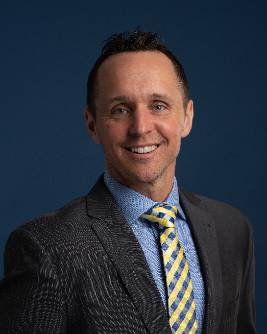
Patrick McNamara, Ph.D., P.E.
Professor
Department of Civil, Construction, and Environmental Engineering
Marquette University
Dr. Patrick McNamara is a Professor of Environmental Engineering at Marquette University and a Wastewater Process Engineer with Black & Veatch. He has over 20 years of experience in managing wastewater solids and residuals, and his research group has been investigating emerging contaminants for a decade. His work is funded by the National Science Foundation, utility companies, and foundations. He has over 90 peer-reviewed journal publications.

Brooke Mayer, Ph.D., PE
Professor
Department of Civil, Construction, and Environmental Engineering
Marquette University
Dr. Brooke Mayer is a Professor in the Department of Civil, Construction, and Environmental Engineering at Marquette University. She graduated from the Environmental Engineering program at Arizona State University (B.S. – 2004, M.S. – 2006, Ph.D. – 2008), where she taught from 2008 – 2012. Her research and teaching interests focus on physical/chemical water treatment, particularly microbial disinfection and nutrient recovery.
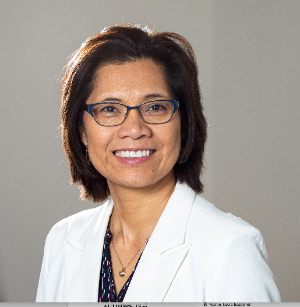
Diana S. Aga, Ph.D.
Henry M.Woodbum Professor of Chemistry
Distinguished Professor and Director of UB RENEW Institute
University at Buffalo, Buffalo, NY
Diana Aga is a Distinguished Professor at the University at Buffalo (UB), the State University of New York, where she holds the Henry Woodburn Professorship in the Department of Chemistry and serves as Director of the UB RENEW Institute (Research and Education in Energy, Environment, and Water). An internationally recognized expert in analytical and environmental chemistry, her research focuses on the fate, transport, transformation, and treatment of chemicals of emerging concern, particularly per- and polyfluoroalkyl substances (PFAS) and other persistent organic pollutants. Using advanced targeted and non-targeted analytical approaches, her work has advanced understanding of contaminant bioaccumulation, toxicity, and environmental impacts in humans and wildlife, while informing the development of innovative technologies for contaminant removal from wastewater. Dr. Aga earned a bachelor's degree in Agricultural Chemistry from the University of the Philippines Los Baños, a Ph.D. in Chemistry from the University of Kansas, and completed postdoctoral training at the Swiss Federal Institute of Aquatic Science and Technology (EAWAG), Switzerland. She is a Fellow of the American Chemical Society and has received numerous honors recognizing her research, leadership, and excellence in graduate mentoring.
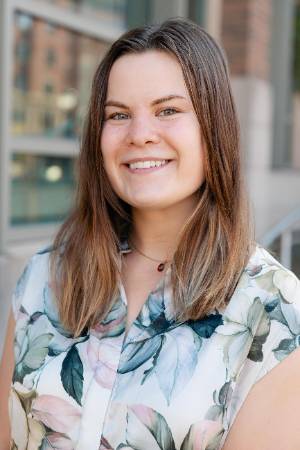
Jessica Calteux, Ph.D. Student
Civil, Construction, and Environmental Engineering
Marquette University (McNamara Research Group)
Jessie Calteux is a third-year PhD student at Marquette University, where she also completed her undergraduate degree in 2024. Through her research, she seeks to understand the fate of PFAS in biosolids during drying. As a lifelong resident of Milwaukee County, she has always had a deep-rooted appreciation of Lake Michigan and a desire to take care of the environment. She is truly grateful that her work allows her to translate this passion into a degree, while staying close to home.
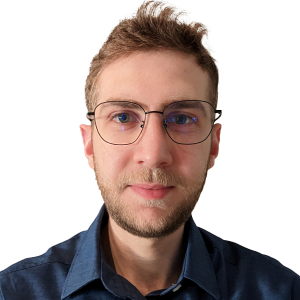
Christian Kassar, P.E., M.S.
Process Engineer
Black & Veatch
Christian Kassar is a Process Engineer with Black & Veatch specializing in treatment technologies for per- and polyfluoroalkyl substances (PFAS). His work focuses on evaluating, piloting, and implementing PFAS treatment systems for drinking water, wastewater, and landfill leachate applications. Christian has supported treatment technology evaluations ranging from conventional approaches such as granular activated carbon (GAC) and ion exchange (IX) to emerging technologies including foam fractionation, electrochemical oxidation, and supercritical water oxidation. He has authored multiple PFAS-related publications and regularly presents on PFAS treatment, pilot testing, and technology implementation at industry conferences. Christian earned his M.S. in Civil, Environmental, and Sustainable Engineering from Arizona State University, where his research focused on PFAS removal and regeneration of ion exchange media.
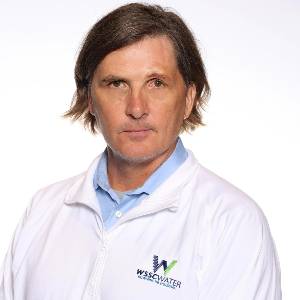
Malcolm Taylor, PhD., P.E.
Principal Environmental Engineer
Department of Operational Reliability and Resilience
WSSC Water
Dr. Malcolm Taylor is a principal Environmental Engineer with WSSC Water, bringing over 25 years of experience in the water & wastewater industry. His work focuses on optimization of advanced wastewater treatment processes and development of environmentally sustainable biosolids management practices. Before coming to WSSC Water, Malcolm earned his PE as a consulting engineer and worked at Penn State University, where he received his PhD. Malcolm has served on the Board of Trustees of the Mid-Atlantic Biosolids Association since 2020.
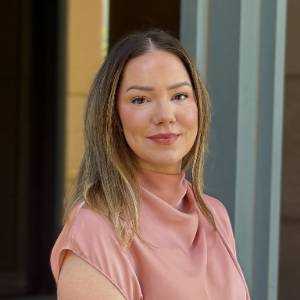
Cayla Cook Carbone, M.S., P.E.
Area Water Treatment Business Class Lead
HDR
Cayla Cook Carbone is a technical expert on water quality with more than 11 years of experience in the water industry. She serves as Vice Chair of the WEF Emerging Contaminants Community and actively designs treatment and remediation strategies for contaminants including PFAS and arsenic. Her focus is delivering projects that elegantly navigate complex regulatory and technical landscapes in drinking water.
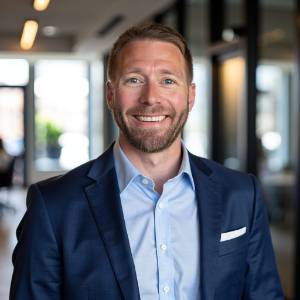
Jeffrey Hlad, P.E.
Wastewater Process Engineering Manager
Metro Water Recovery
Jeffrey Hlad has more than 20 years of experience in water and wastewater treatment design, construction, commissioning, regulatory compliance, and applied research. As Senior Wastewater Process Engineering Manager at Metro Water Recovery, he leads the process engineering and data analytics teams and has managed much of Metro’s PFAS research on wastewater, biosolids, soils, groundwater, and crops. Jeff holds BS and MS degrees from the University of Colorado Boulder.
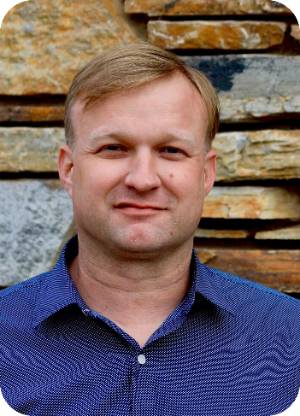
Andrew Patterson, Ph.D.
VP Innovation and Development
Eurofins Environment Testing Northern California
Andrew is the VP of Innovation and Development for Eurofins Environment Specialty Services. He brings over 25 years of experience in the environmental laboratory industry with a focus on GC-HRMS and LC-MS/MS analyses. These approaches have focused on PCBs, Chlorinated Dioxins, PBDEs, PFAS, and human biomonitoring. He is passionate about passive sampling, microplastic analysis, and contaminants of emerging concern. Andrew is the originator of the PFAS Exposure™ fingerprick blood test and lead developer for EPA draft method 1634, 6PPD-quinone analysis in aqueous samples. Andrew holds a Bachelor of Science in Microbiology, concentrating in Biochemistry from Cal Poly, San Luis Obispo.
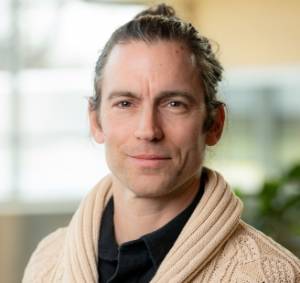
Carsten Prasse, Ph.D.
Associate Professor
Department of Environmental Health and Engineering
Johns Hopkins University
Carsten Prasse, PhD, is an Associate Professor in the Department of Environmental Health and Engineering at the Johns Hopkins Whitening School of Engineering and the Bloomberg School of Public Health.
Carsten obtained his PhD in Chemistry at the Federal Institute of Hydrology in Koblenz, Germany, under the guidance of Dr. Thomas Ternes. After completing postdoctoral work at the University of California at Berkeley working with Dr. David Sedlak, he joined Johns Hopkins University as a faculty member.
His research focuses on the fate of contaminants in the built and natural environment with a focus on the identification of previously unknown organic chemicals and their transformation products. Prioritizing which compounds are most threatening to human and environmental health is a great challenge given the large number of anthropogenic chemicals. To tackle this problem, his research group is developing new methodologies to assess exposures to toxic compounds.
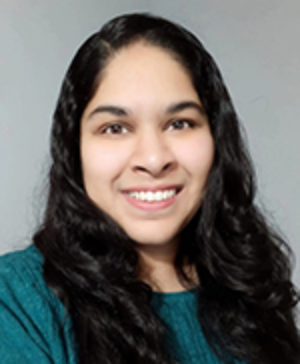
Nishita D'Souza, Ph.D.
Associate Research Professor
Water Quality, Environmental and Molecular Microbiology Laboratory
Michigan State University
Nishita D’Souza is an Associate Research Professor at the Water Quality, Environmental and Molecular Microbiology laboratory at Michigan State University. Nishita has a background in Water Microbiology, and her doctoral work focused on evaluating bacterial surrogates for the validation of protozoa disinfection in ozone-based water treatment systems. She has experience in developing microbiological methods and working with waterborne bacterial, viral, and protozoan pathogens, particularly in water and wastewater. Nishita is an experienced Microbiology Instructor and enjoys mentoring undergraduate and graduate students on various projects.
Nishita’s research at MSU focuses on Microbial Source Tracking to monitor river water quality. She is actively involved in the Wastewater-Based Epidemiology surveillance studies for SARS CoV-2 virus led by Dr. Joan Rose. Her research focuses on studying microorganisms through classical microbial culture-based methods as well as advanced molecular methods such as qPCR and droplet digital PCR. Nishita works with Water utilities, Industry clients, Academic researchers, and Global organizations to better understand water quality issues.
Schedule
|
9:00 am
|
Welcome
Patrick McNamara, Ph.D. & Brooke Mayer, Ph.D.
|
|
9:10 am
|
Beyond PFAS: Finding Wastewater's Hidden Fluorine
Diana Aga, Ph.D.
|
|
9:45 am
|
WRF 5337 - Breaking the Forever PFAS cycle - Treatment of process flows from solids dewatering prior to recycle as a mechanism to reduce PFAS loading to receiving Water Resource Recovery Facilities
Malcolm Taylor, Ph.D., P.E.
|
|
10:20 am
|
From Evaluation to Implementation: Utility Approaches for PFAS Treatment in Landfill Leachate
Christian Kassar, P.E., M.S.
|
|
10:55 am
|
Break
|
|
11:05 am
|
Field-Scale Fate, Vertical Attenuation, & Crop Uptake of PFAS Following Long-Term Biosolids Land Application
Jeff Hlad, P.E.
|
|
11:40 am
|
An Unconventional Application of Conventional Technology: How Drying Affects the PFAS Profile of Biosolids
Jessica Calteux, Ph.D. Student in Environmental Engineering - Marquette University
|
|
12:15 pm
|
Lunch
|
|
1:00 pm
|
Microplastic Overview and Interactions with Other CECs
Cayla Cook Carbone, M.S., P.E.
|
|
1:35 pm
|
Beyond Salmon and Stormwater: Survey of the Emerging Contaminant 6PPD-quinone
Andrew Patterson, Ph.D.
|
|
2:15 pm
|
Break
|
|
2:30 pm
|
Assessment and Prioritization of Organic Contaminants in Biosolids
Carsten Prasse, Ph.D.
|
|
3:05 pm
|
Integrated One Heath Monitoring: Advancing Public Health Systems through Wastewater
Nishita D'Souza, Ph.D.
|
|
3:45 pm
|
Adjourn
|
Registration & Cost
REGISTRATION
Cost is $120 per attendee
2nd member from the same institution: $60
Students: $30
Sponsorship / Donations: Unlimited
Location
Hosted by the Water Quality Center and Marquette University through Microsoft Teams.
Links will be emailed to registered attendees.
Sponsors
Thank you to our 2026 Emerging Contaminants Short Course sponsors! If you are interested in becoming a sponsor, sponsorship packages can be found below. Contact Dr. Patrick McNamara with any questions or to purchase a package.
2026 Gold Sponsors: Marquette University Water Quality Center and Water Equipment and Policy I/UCRC Research Center


Sponsorship Packages:
Gold Sponsorship - $2,000: Sponsorship includes registration for 5 members of the sponsoring organization, recognition as Gold Sponsor on slides posted at the beginning of the course, during breaks, and at the end of the course.
Silver Sponsorship - $1,000: Sponsorship includes registration for 2 members of the sponsoring organization, recognition as Silver Sponsor on slides posted at the beginning of the course, during breaks, and at the end of the course.
Bronze Sponsorship - $500: Sponsorship includes recognition as a Bronze Sponsor on slides posted at the beginning of the course, during breaks, and at the end of the course.


