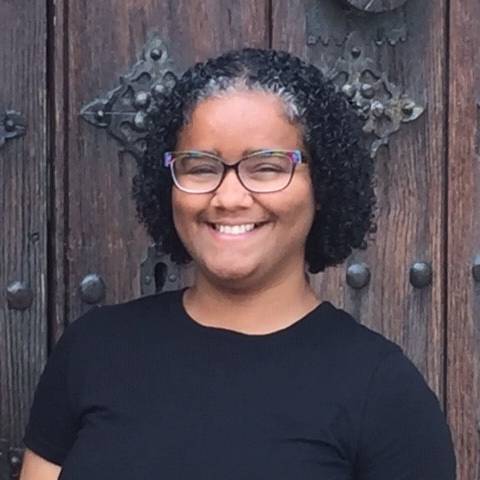
Associate Professor
Counselor Education and Counseling Psychology
I am a proud immigrant from the island of Trinidad and Tobago, a rescue dog mom, and an Ashtanga yoga student. While I love my work as an educator, researcher, and clinician, I also enjoy reading, time outdoors, contemplative practices, and craft as essential aspects of my self-care practices. Overall, I am curious about the effectiveness of mindfulness-based interventions and Dialectical Behavior Therapy (DBT) and how ethnic minority groups experience these interventions and improve their quality of life. I also want to know what does and does not work. I also have a special interest in Single Case Research Designs (SCRDs). As an educator, advisor, and supervisor, I use a wellness-based developmental approach while practicing cultural awareness. My approach to clinical work is holistic, collaborative, and grounded in DBT, somatic therapy, and mindfulness. I am passionate about helping individuals learn emotion regulation and coping skills through a culturally informed lens. As a researcher, I am mindful of the ways my research may impact the communities I interact with and approach research as a collaborative and empowering opportunity. I earned my PhD in counselor education from Texas A&M University – Corpus Christi (CACREP), my master’s degree in clinical mental health counseling (addiction specialization) from University of Wisconsin-Stout, and my BSc in behavioral science (psychology emphasis, sociology minor) from Andrews University. I am licensed in Wisconsin as a Licensed Professional Counselor (LPC) and a Substance Abuse Counselor (SAC). You can learn more about me and my research on my website and on my Google Scholar page.
Education
- MS Clinical Mental Health Counseling (Concentration: Alcohol and Other Drug Abuse): University of Wisconsin – Stout
- Ph.D. Counselor Education: Texas A&M University – Corpus Christi
- Licensed Professional Counselor (LPC), Wisconsin
- Substance Abuse Counselor (SAC), Wisconsin
Courses Taught
- Group Counseling
- Lifespan Human Development
- Practicum/ Internship
- Career Development and Counseling
- Trauma Counseling
- Addictions Counseling
- Introduction to Counseling
- Doctoral Teaching Assistant Seminar
Research Interests
I am specifically interested in the efficacy of mindfulness- based practices/interventions, and Dialectical Behavior Therapy (DBT) for improving the quality of life in ethnic minority groups. I am curious about how various ethnic groups experience, define, and use mindfulness-based practices/interventions and DBT. I also want to know what does and does not work. I have a special interest in Single Case Research Designs (SCRDs) and bridging the practitioner-researcher gap through teaching, research, and service.
Publications
Kriofske Mainella, A. M., Raval, G., Koziol, C., & Callender, K. A. (2023). Getting on the same page in multicultural counseling training. Counselor Education and Supervision, 1-13.
Kriofske Mainella, A., Callender, K. A., & Laubacher, S. (2023). Sex education through the lifespan: Evaluating a pilot intervention for older adults in changing attitudes and comfort with sexuality. Gerontology & Geriatrics Education.
Callender, K. A., Haktanir, A. (2023). Development of the counsellor personal wellness and professional wellbeing assessment. British Journal of Guidance and Counselling.
Callender, K. A., Haktanir, A. [in press]. Development of the Counselor Personal Wellness and Professional Wellbeing Assessment. British Journal of Guidance and Counselling.
Callender, K. A, Ong, L. Z., & Othman, E. H. [2022]. First-generation immigrant/refugee Muslim women’s prayer and mindfulness in relation to mental health. Journal of Religion and Health.
Ong, L. & Callender, K. A., Blalock, K., & Holzbauer, J. [2021] Racial, Ethnic Differences in Complementary and Integrated Health Use among Adults with Mental Illness: Results from the 2017 National Health Interview Survey. Australian Journal of Rehabilitation Counselling
Callender, K. A., & Klassen-Bolding. (2020). “A force to be reckoned with”: College women’s experiences with the #MeToo movement. Journal of College Counseling, 23, 194-206.
Haktanir, A., & Callender, K. A . (2020). Meta-analysis of Dialectical Behavior Therapy (DBT) for treating substance use. Research on Education and Psychology, 4 (Special Issue), 74-87.
Callender, K. A., Trustey, C., Alton, L., & Hao, Y. (2019). Single case evaluation of a mindfulness-based mobile application with a substance abuse counselor. Counseling Outcome Research and Evaluation (online) doi:10.1080/21501378.2019.1686353
Callender, K. A., & Lenz, A. S. (2018). Implications for wellness-based supervision and professional quality of life. Journal of Counseling and Development, 96, 436-448. doi:10.1002/jcad.12225
Lenz, A. S., & Callender, K. (2018). Single-case research design. In C. A. Morris and K. L. Wester (Eds.), Making Research Relevant: Applied Research Designs for the Mental Health Practitioner (81-94). New York, NY: Taylor and Francis.
Stevens, P. W., Callender, K. A., & Smith, R. L. (2018). Behavioral addictions/Non-substance-related disorders: An overview. In P. Stevens & R. L. Smith. Substance abuse counseling: Theory and practice (6th ed.). New York, NY: Pearson.
Lenz, A. S., Haktanir, A., & Callender, K. (2017). Meta-Analysis of trauma-focused therapies for treating posttraumatic stress disorder. Journal of Counseling and Development, 95, 339-353. doi:10.1002/jcad.12148
Lenz, A. S., Henesy, R., & Callender, K. A. (2016). Efficacy of the seeking safety program for co-occurring PTSD and substance use disorders. Journal of Counseling and Development, 94, 51-61. doi:10.1002/jcad.12061
Lenz, A. S., Del Conte, G., Hollenbaugh, K. M., & Callender, K. (2016). Emotional regulation and interpersonal effectiveness as mechanisms of change for treatment outcomes within a DBT program for adolescents. Counseling Outcome Research and Evaluation, 1, 1-13. doi:10.1177/2150137816642439