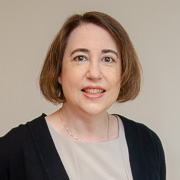
Associate Professor
Counselor Education and Counseling Psychology
I am a licensed psychologist in Wisconsin specializing in couple and family therapy. My scholarship is designed to promote the health and well-being of couples and families, using a social justice framework to guide my work.
My research program encompasses three primary areas of inquiry. The first line of my research investigates the links between mental health and relationship processes among couples, with a particular emphasis on the ways these factors predict treatment process and outcome in psychotherapy. My second line of research explores patterns of client and therapist behavior that are associated with successful treatment in individual, couple, and family psychotherapy. The final line of my research explores the relational and psychological well-being of military couples and families.
My research has been funded by the U.S. Department of Defense, the American Psychological Association, and the American Psychological Foundation. I serve on the editorial board of several academic journals, including Family Process, Psychotherapy, and Psychotherapy Research.
I teach a variety of courses at the master’s level (family counseling, internship in clinical mental health counseling) and at the doctoral level (intermediate and advanced statistics, measurement and evaluation). I enjoy mentoring students in the scientist – practitioner model as they begin their professional careers.
I received my undergraduate degree in psychology and theology from Marquette University in Milwaukee, Wisconsin, and my doctoral degree in clinical psychology from Miami University in Oxford, Ohio. I also completed a postdoctoral fellowship in couple and family psychology at The Family Institute at Northwestern University in Evanston, Illinois.
Education
Ph.D., Clinical Psychology, Miami University
Courses Taught
- Couple and Family Therapy
- Intermediate Research and Statistics
- Advanced Research and Statistics
- Psychometric Measurement and Evaluation
- Internship in Clinical Mental Health Counseling
Research Interests
My research program encompasses three primary areas of inquiry.
The first line of my work examines the associations between couples’ interpersonal behavior, relationship distress, and psychopathology, with a particular emphasis on the ways in which these factors predict treatment process and outcome in couple psychotherapy. The goal of this research is to develop a more comprehensive system of assessment, intervention, and outcome evaluation for couples suffering from depression, anxiety, and other disorders.
My second line of work is designed to understand the factors associated with successful treatment in individual, couple, and family psychotherapy. This research is being used to identify patterns of patient change and therapist behavior that predict the effectiveness of systemically-based psychotherapy.
My final line of research explores the relational and psychological well-being of military couples. Two major projects comprise this effort. The first evaluates the interpersonal mechanisms through which PTSD and couple discord confer risk for psychological and physical problems. The second, funded by the U.S. Department of Defense (U.S. Army Medical Research and Materiel Command; USAMRMC), is designed to understand how military couples adjust to reunion after a service member returns home from deployment. The goal of this project is to evaluate how mental health symptoms and intimate relationship characteristics predict difficulty with reintegration following deployment. Results are being used to generate research-based guidelines to inform the curriculum and timing of education, prevention, and intervention efforts for military couples throughout the country.
Publications
Selected Publications
Knobloch-Fedders, LM., Quirk, K., & Knobloch, L.K. (in press). Relational uncertainty and dyadic synchrony within the interactions of couples. Journal of Social and Personal Relationships.
Knobloch, L.K., Knobloch-Fedders, L.M., Yorgason, J., Wehrman, E.C., & Monk, J.K. (2022). Trajectories of relational turbulence and affectionate communication across the post-deployment transition. Communication Monographs, 89(2), 189 – 210.
Grau, P.P., Melchert, T.P., Garnier-Villarreal, M., Knobloch-Fedders, L.M., & Wetterneck, C.T. (2021). Change in self-compassion, psychological inflexibility, and interpersonal courage in intensive PTSD treatment: A latent growth curve analysis. Mindfulness, 12(12), 2983 – 2996.
Knobloch, L.K., Knobloch-Fedders, L.M., Yorgason, J., Basinger, E.D., Abendschein, B., & McAninch, K.G. (2021). Suspicion about a partner’s deception and trust as roots of relational uncertainty during the post-deployment transition. Journal of Social and Personal Relationships, 38(3), 912 – 934.
Smith, T.W., Baron, C.E., Caska-Wallace, C.M., Knobloch-Fedders, L.M., Renshaw, K.D., & Uchino, B.N. (2021). PTSD in veterans, couple behavior, and cardiovascular response during marital conflict. Emotion, 21(3), 478 – 488.
Knobloch-Fedders, L.M., Knobloch, L.K., Scott, S., & Fiore, H. (2020). Relationship changes of military couples during reintegration: A longitudinal analysis. Journal of Social and Personal Relationships, 37(7), 2145 – 2165.
Knobloch-Fedders, L.M., & Wilson, S.J. (2020). Interpersonal behavior in couple therapy: Concurrent and prospective associations with depressive symptoms and relationship distress. Psychotherapy Research, 30(2), 183 – 194.
Knobloch, L.K., Knobloch-Fedders, L.M., & Yorgason, J.B. (2019). Mental health symptoms and the reintegration difficulty of military couples following deployment: A longitudinal application of the relational turbulence model. Journal of Clinical Psychology, 75(4), 742 – 765.
Knobloch, L.K., Knobloch-Fedders, L.M., & Yorgason, J.B. (2018). Communication of military couples during deployment predicting generalized anxiety upon reunion. Journal of Family Psychology, 32(1), 12 – 21.
Knobloch, L.K., Knobloch-Fedders, L.M., Yorgason, J.B., Ebata, A.T., & McGlaughlin, P.C. (2017). Military children’s difficulty with reintegration after deployment: A relational turbulence model perspective. Journal of Family Psychology, 31(5), 542 – 552.
Knobloch-Fedders, L.M., Caska-Wallace, C.M., Smith, T.W., & Renshaw, K. (2017). Battling on the home front: Posttraumatic stress disorder and conflict behavior among military couples. Behavior Therapy, 48(2), 247 – 261.
Knobloch-Fedders, L.M., Critchfield, K.L., & Staab, E. (2017). Informative disagreements: Associations between relationship distress, depression, and discrepancy in interpersonal perception within couples. Family Process, 56(2), 459 – 475.
Knobloch-Fedders, L.M., Pinsof, W.M., & Haase, C. (2015). Treatment response in couple therapy: Relationship adjustment and individual functioning change processes. Journal of Family Psychology, 29(5), 657 – 666.
Knobloch-Fedders, L.M., Elkin, I., & Kiesler, D.J. (2015). Looking back, looking forward: A historical perspective on psychotherapy process research. Psychotherapy Research, 25(4), 383 – 395.
Grants
Research Grants:
Knobloch-Fedders, L.M. (P.I.). The adjustment of military couples after deployment: Mental health, relationship quality, and reintegration difficulty. Summer Faculty Fellowship and Regular Research Grant Award, $11,465, Marquette University, 2022.
Knobloch, L.K., (P.I.), & Knobloch-Fedders, L.M. (Co-I.). Reintegration difficulty of military couples following deployment. USAMRMC Log No. 12154004, Grant #W81XWH-14-2-0131, $834,061, U.S. Department of Defense, 7/1/2014 – 6/30/2018.
Knobloch-Fedders, L.M. (P.I.), Caska, C., Smith, T., & Renshaw, K. Posttraumatic stress disorder and physiological reactivity in response to conflict among military couples. Division 19 (Society for Military Psychology) Member / Affiliate Member Research Grant Award, $5,000, American Psychological Association, 2014.
Knobloch-Fedders, L.M. (P.I.). The interpersonal context of depression in couples. Randy Gerson Memorial Research Award, $3,000, American Psychological Foundation, 2004.
Teaching Grants:
Knobloch-Fedders, L.M., Garnier-Villarreal, M., & Magnus, B. Development of an interdisciplinary curriculum to advance graduate-level research training. Way Klingler Teaching Enhancement Award, $20,000, Marquette University, 2018.