Sustainable Materials Management
Trash
At Marquette, there is a concerted effort to divert as much waste as possible from the landfill. All trash collected goes to the Emerald Park Landfill in Muskego, WI. At this landfill, gas is collected and distributed for energy use at the Milwaukee Metropolitan Sewage District's Jones Island Water Reclamation Facility to power their operations. The conversion of landfill gas to energy is an effective means of recycling and reusing this valuable resource. Learn more about the landfill gas-to-energy process at Jones Island.
It can be difficult to know where to dispose of materials that are not made for the common trash bin. See the specific areas we collect along with places to drop off your products that are at the end of their life cycle.
Expand all | Collapse all
Computers, televisions, VCRs, stereos, printers, copiers, cellphones and fax machines are common electronic products. Many of these products can be reused, refurbished, or recycled.
Disposal: For e-waste accumulated on the Marquette campus only, submit a Facilities work order for pick-up. Marquette properly disposes of electronic waste using a certified third-party hauler.
Alkaline batteries can be disposed of in the trash or brought to BatteriesPlus
Lithium ion batteries (rechargable batteries, batteries in laptops), must be disposed of properly by Environmental Health and Safety. Please submit a work order.
Disposal of: mercury-containing equipment, lamps, and aerosol cans folllow Marquette's Universal Waste Management Plan for disposal guidance.
Toner and ink cartridges can be brought to the first floor of Wehr Chemistry.
Food Waste
Marquette University diverts pre-consumer food waste in The Commons Dining Hall and Schroeder Dining Hall. Food waste is collected by Compost Crusader (local, women-owned small business) and hauls the food waste to Blue Ribbon Organics where it is turned into rich compost!
Recycling
Marquette University participates in single-stream recycling which means that all items that can be recycled are collected in one bin and then sorted at an offsite materials recovery facility (MRF).
In efforts to reduce contamination of recycling bins, Campus Sustainability developed updated recycling signage to serve as an educational visual to community members on what can and cannot be disposed of in the recycling bins.
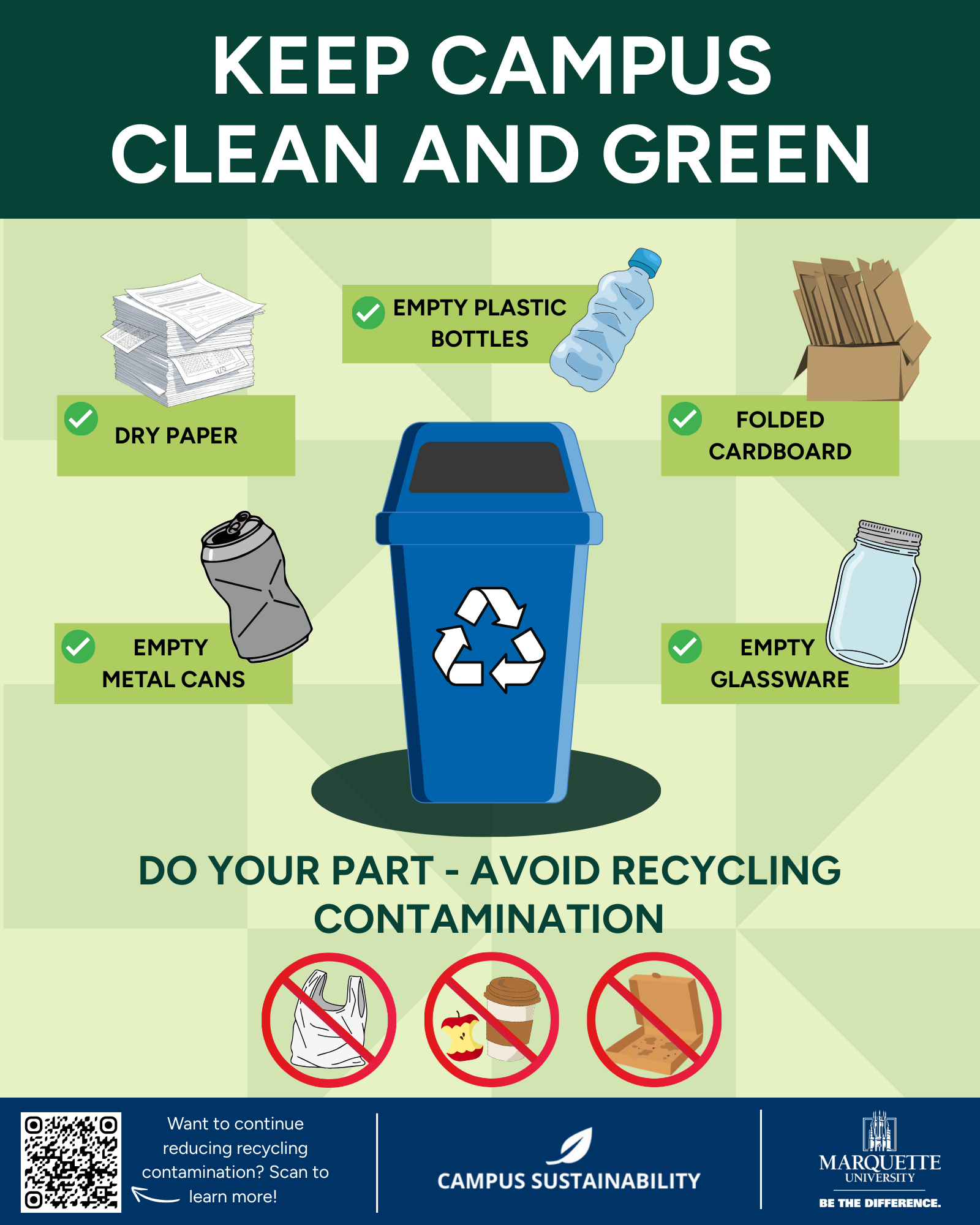
Frequently asked questions on how to recycle at Marquette University:
Expand all | Collapse all
- Empty metal cans
- Dry paper
- Empty plastic bottles
- Folded cardboard
- Empty glassware
Make sure your recyclables are not disposed within a bag, as they should be loose.
- Plastic bags in any form
- Food or beverages alone, within packaging, or individual packaging that has been stained by them
- Wet paper
- Styrofoam
Are there specific plastic numbers that can be recycled?
- Plastic #1, 2, 5 are recyclable - The Materials Recycling Facility (MRF) grinds these down and are sold to become new plastic packaging. Please make sure your plastics are empty, clean, and dry prior to disposing in the recycling bin.
- Plastic #3, 4, 6, 7 are not recyclable and should be placed in the garbage.
What is recycling contamination?
When non-recyclable materials or garbage is present within the recycling bin, the entire lot becomes contaminated which disrupts the recycling process. The action of innacurate recycling, not cleaning items, or disposing of containers with food residue, put all contents in the bin at risk for being sent to the landfill. Ensuring that content you intend to recycle is correct, is empty, clean, and dry is critical for recycling to work and go to the MRF.
Sustainable Move Out
MarKept Move Out and Move Out for Hunger are sustainable move out programs that collect gently used dorm items and non-perishable foods to be diverted from the landfill and given back to the Marquette student community. These programs work to reduce campus generated waste to lessen our insitutional ecological footprint. MarKept collects housewares, small working appliances, books, and cleaning supplies. Move Out for Hunger collects unopened, non-perishable and un-expired food. If you are curious how to be apart of the solution, visit the Sustainable Move Out webpage.
Surplus
Marquette University's Purchasing Department values economic, social, and environmental sustainability and puts that into practice through every facet of their operations. The Purchasing Department manages the university's surplus furniture and equipment, making every effort to keep items that are in good, usable condition from going to the landfill.
If you are a Marquette University staff or faculty member, you may take advantage of the surplus program. Discover what is available at the Purchasing Surplus website.


