“Where are the streets of gold? Intergenerational mobility of immigrants across destination countries”
Dr. Leah Boustan, Yale University
Friday, October 30, 2026 at 3:00 pm
AMU - Weasler Auditorium
About the talk
The talk will explore patterns of intergenerational mobility among the children of immigrants across fifteen destination countries. Daughters of immigrants experience greater mobility than daughters of locals in almost every destination. Sons of immigrants, meanwhile, enjoy an advantage in Anglosphere countries, but not in continental Europe. Differences in mobility across countries cannot be explained by parents’ countries of origin, but instead seem to reflect differences in destination-country education systems and labor markets. The talk will conclude by looking at how political attitudes toward immigration vary across countries.
About the speaker
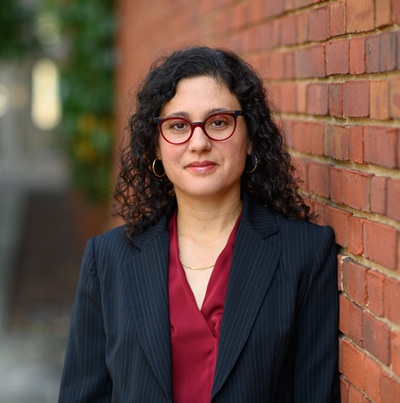 Leah Boustan is Professor of Economics and Director of the Economic History Program at Yale University. She is also a Research Associate at the National Bureau of Economic Research, where she co-directs the Development of the American Economy Program, and a co-editor of the American Economic Journal: Applied Economics.
Her research sits at the intersection of economic history and labor economics, with a focus on migration, labor markets, and inequality in American history. She is the author of Competition in the Promised Land: Black Migrants in Northern Cities and Labor Markets (Princeton University Press, 2016), which received awards from the Social Science History Association and the Economic History Association. Her second book, Streets of Gold: America’s Untold Story of Immigrant Success (with Ran Abramitzky; PublicAffairs, 2022), was named among the best books of 2022 by The New Yorker, Forbes, and Behavioral Scientist.
Boustan received the Alfred P. Sloan Research Fellowship in 2012 and was elected to the American Academy of Arts and Sciences in 2026. She is also a Fellow of the Econometric Society and the Society of Labor Economists. She earned her A.B. from Princeton University and her Ph.D. from Harvard University.
About the Marburg Lecture
The lecture series is named in honor of the late Theodore F. Marburg, a long-time member of the economics department. The goal of the Marburg Memorial Lecture is to provide a forum for the discussion of moral, philosophical and social dimensions of economic issues, as well as continue Professor Marburg’s commitment to the economic aspects of peace and justice. The Marburg Lecture is made possible by the generosity of the Marburg family and through the support of the Center for Applied Economics. The Marburg lecture is generally held in November of each year.
Previous Marburg Lectures
2025-2026 Dr. Janet Currie, Yale University “Investing in Children to address the Youth Mental Health Crisis”
2024-2025 Dr. David Autor, MIT "Expertise, Artificial Intelligence, and the Work of the Future"
2023-2024 Dr. Marianne Bertrand, "Gender, Stereotypes and Inequality"
2022-2023 Dr. Rohini Pande, Henry J Heinz II Professor of Economics, Yale University
When the Tide Turns: Poverty, Inequality, and Power”
watch video
2021-2022 Matthew O. Jackson, from Stanford University Department of Economics
The Dynamics of Social Networks and Homophily: Implications for Inequality and Economic Mobility
watch video
2020-2021 Dr. Eric Rosengren, President, Federal Reserve Bank of Boston
Economic Fragility: Implications for Recovery From the Pandemic
watch video
2019-2020 - Dr. Esther Duflo, MIT Economics
"Good Economics for Hard Times"
watch video
2018-2019 - Dr. Devin Pope, Booth School at the University of Chicago
"Behavioral Economics in the Real World" Using primarily observational data, Pope studies how psychological biases play out in field settings and economic markets. Examples include left-digit bias and projection bias in car markets and time inconsistency in housing markets.
watch video
2017-2018 - Dr. Joshua Angrist, Ford Professor of Economics at MIT
Dr. Angrist is also a director of MIT’s School Effectiveness and Inequality Initiative. His Marburg lecture focused on how empirical economics have evolved to answer important policy questions, how this evolution has increased the impact of economics on other disciplines, and how undergraduate economic instruction should change accordingly.
2016-2017 - Dr. Michael Greenstone, University of Chicago, "The Global Energy Challenge"
watch video
Greenstone discusses the global energy challenge that requires balancing the need for inexpensive and reliable energy, while limiting environmental and health damages and guarding against disruptive climate change.
2015-2016 - Dr. Emily Oster, Brown University, "Pregnancy, Causality and Economics" - watch video
Research on the value of health behaviors, once the lone purview of doctors and medical journals, is increasingly available to consumers from the Internet and media coverage. What is often missing is a serious look at whether the relationships in data are really causal ones. Does drinking a lot of coffee lengthen your life, as some studies suggest? Or is it just that the kind of people who drink a lot of coffee live longer for other reasons?
2014-2015 - Professor Edward Glaeser, Harvard University, "Triumph of the City" - watch video
Cities are often seen as the source of social problems such as poverty and crime, while we retain romantic notions of idyllic rural life. The truth is very different. In this lecture, Professor Edward Glaeser, the world’s leading expert in the economics of cities, will discuss why cities are crucial to economic development, why proximity has become ever more valuable as the cost of connecting across long distances has fallen and why, contrary to popular myths, dense urban areas are the true friends of the environment, not suburbia.
2013-2014 - Harvard University Professor of Economics Raj Chetty - watch video
Prof. Chetty is one of the authors of a groundbreaking new study on upward mobility in America. The study examined data from cities across the country, and found that the chances of poor children’s climbing the economic ladder were considerably higher in some places than others. Prof. Chetty’s research focuses on what he calls “equality of opportunity: how can we give children from disadvantaged backgrounds better chances of succeeding”
2012-2013 - Prof. John A. List - watch video
Department of Economics, University of Chicago
Using the world as his sandbox, Prof. List tells us why women get paid less than men, how we can shrink the racial achievement gap in one minute, and what seven words can end discrimination. Dr. List has been one of the pioneers in the development and use of field experiments in economics. A field experiment evaluates the market behavior of participants, but instead of these actions taking place in an artificial laboratory setting, the field experiment is conducted in the normal market setting for the participant.
2011-2012 - Dr. Ronald G. Ehrenberg
An expert in the economics of higher education, Ehrenberg has served as a consultant to faculty and administrative groups and trustees at a number of colleges and universities on issues relating to tuition and financial aid policies and other budgetary and planning issues. In 2002, he wrote Tuition Rising, an examination of the American higher education system. While in Milwaukee, Dr. Ehrenberg also was interviewed by the Journal Sentinel on the topic of rising tuition.
2010-2011 - Dr. Robert Putnam
Peter and Isabel Malkin Professor of Public Policy at Harvard University Dr. Putnam discussed American Grace: How Religion Divides and Unites Us. Professor Putnam and Professor Daniels, co-director of the CGES, were interviewed for the Marquette Difference Network.
2009 - Professor Marianne Ferber
Department of Economics
University of Illinois, Urbana
2008 - Professor James P. Ziliak, Gatton Chair in Microeconomics
Director, Center for Poverty Research
University of Kentucky
2007 - Professor Solomon W. Polachek
Departments of Economics and Political Science
State University of New York at Binghamtom
2006 - Professor Jerry Evensky
Department of Economics
Maxwell School of Syracuse University
2005 - Mr. Chris Lowney
Author & Special Assistant to President
Catholic Medical Mission Board
2004 - Dr. Laurence Iannaccone, Professor
Department of Economics
George Mason University
2000 - Dr. Ransford W. Palmer, Professor
Department of Economics
Howard University
1998 - Dr. Herman E. Daly, Scholar in Residence
University of Maryland
School of Public Affair
1997 - Dr. Marilyn Moon, Senior Fellow
Health Policy Center of the Urban Institute
1995 - Fr. William Byron, S.J., Director
Center for the Advanced Study of Ethics
Georgetown University


