Creative problem solving is an essential skill in any peacebuilder’s toolbox. In this series, the we interview peacemakers from a wide range of professions and disciplines to explore time-tested and novel ways that nonviolent action can infuse creativity and pragmatism into addressing pressing issues in our communities.
Listen on:
Meet the host
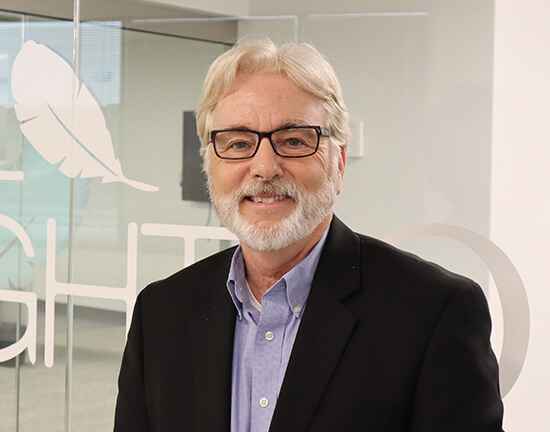
John Byrne, Arts '78, is an internationally known regulatory, policy, and legislative expert. He received the “Distinguished Alumnus of the Year Award” for the College of Arts and Sciences from Marquette University in 2024. He also hosts AML Conversations, a podcast focused on financial regulation and compliance.
Full bio
John Byrne, Esq., CAMS, is the Executive Chairman of the Advisory Board of AML RightSource. He is also an Adjunct Professor at George Mason University’s Schar School of Policy and Government at the Terrorism, Transnational Crime and Corruption Center (TRACC).
John has been a leading voice in the anti-money laundering (AML) community for over 40 years. John has experience in a vast array of financial service-related issues, with particular expertise in regulatory oversight, policy, governance, anti-money laundering, privacy and terrorist financing.
John has received numerous awards, including the first Director's Medal for Exceptional Service from the US Treasury Department's Financial Crimes Enforcement Network (FinCEN), the American Bankers Association’s (ABA) Distinguished Service Award for his career work in the compliance field, the ACAMS Lifetime achievement Award (2023), as well as several awards for writing columns and blogs and for his podcast, AML Now. The podcast is now “AML Conversations” and combined with “This Week in AML” are closing in on one million downloads since 2018.
John also serves on Marquette University’s Commercial Banking Board and co-created the AML Partnership Forum in 2022.
Season 1
Episode 1 | Introduction: The need for courage in peacemaking with Pat Kennelly
In the inaugural episode, host John Byrne speaks with Pat Kennelly, director of the Marquette University Center for Peacemaking. They discuss the Center's goals, highlighting the impacts on student formation and community engagement. The discussion also explores peacemaking in different professions and geographies.
Episode 2 | Restorative justice and conceptualized peace: Ideas for improving society with Dr. Gabe Velez
Dr. Gabriel Velez, associate professor at Marquette University and author of Making Meaning of Justice and Peace: A Developmental Lens, discussed how peace education and restorative practices shape young people’s understanding of justice, belonging, and community—both in Colombia and Milwaukee. Dr. Velez also shares insights on conceptualizing peace, the challenges of fostering optimism in turbulent times, and practical steps for encouraging youth engagement.
Episode 3 | Approaches to global justice with Dr. Grant Silva
Dr. Grant Silva, associate professor at Marquette University, discussed how his philosophy course on global justice challenges students to expand their understandings of power, justice, globalization, and nationalism. The course was in part inspired by field research he conducted along the U.S.-Mexico border, including a ride along with a Customs and Border Patrol unit. Dr. Silva also shares his unique approach to understanding racism as a form of self-love, which he argues allows for better understanding of the motivations individuals act on, even when their beliefs are said to lack bias, prejudice, or “hatred”.
Episode 4 | Small steps, big impact with T. Michael McNulty, S.J.
T. Michael McNulty, S.J. joins to discuss ethics in real estate, immigration policy, and educating leaders who recognize that small steps can have big impacts. The conversation touches on the important role of zoning boards, the case for open immigration, and the value of good trouble to effect change.
Episode 5 | Financial Access and Global Peace Efforts
Delve into the world of financial regulations with an expert panel on the critical need for collaboration between financial institutions, regulators, and nonprofits to ensure that humanitarian efforts are not stifled by regulatory hurdles. Brian Kimari, coordinator of Kenya NPO Working Group on the Financial Action Task Force, discusses how the Financial Action Task Force has produced unintended impacts on peacebuilding and human rights organizations in Kenya with Recommendation 8. Michael Beer, co-director at Nonviolence International, discusses how derisking has impacted Nonviolence International. And Poorvika Mehra, Howard S. Brembeck Fellow at the Charity & Security Network, discusses the challenges posed by de-risking and de-banking practices that often hinder nonprofit organizations from accessing essential financial services. Their combined analysis uncovers the need for a truly risk-based approach that balances compliance with the operational realities of civil society groups.
Episode 6 | Challenging Stereotypes, Protecting Human Dignity with Dr. Louise Cainkar
Dr. Louise Cainkar, professor of Social and Cultural Sciences and director of Peace Studies at Marquette University, discussed how she became interested in researching human rights and her scholarship on the impact of 9/11 on Arab and Muslim communities. She also shared about the value of Marquette’s Peace Studies program, including opportunities to participate in programs such as the recent Engaging Muslims, Countering Islamophobia immersion. To close the episode, Cainkar discusses the need for human dignity in addressing immigration and the role hope plays in sustaining her research, teaching, and advocacy.
Episode 7 | The Death Penalty Violates Human Dignity with Sister Helen Prejean
Helen Prejean, C.S.J. joined us to share stories and wisdom from her lifelong journey advocating for the abolition of the death penalty. She discussed how she was pulled into this work, ways the death penalty negatively impacts society at large, and how Catholic teaching on the death penalty has evolved in recent years. To close the episode, Prejean reveals how experiences with empathy, forgiveness, and faith can reshape our understanding of justice and give direction to how we are called to act today.
Prejean is the author of Dead Man Walking which was adapted into an Academy Award winning film, and most recently, a graphic novel. Her current project aims to bring attention to the case of Manuel Ortiz, an innocent man from El Salvador who is on death row in Louisiana for crimes he did not commit. For more information, visit sisterhelen.org.
Episode 8 | Journalist Safety and Press Freedom with Dr. Tom Durkin
Dr. Tom Durkin, director of safety education for the James W. Foley Legacy Foundation, discusses how targeted attacks, kidnapping, and even digital threats are reshaping the landscape of safety preparation for journalists both abroad and at home. He shares about the work of the Foley Foundation, including their online curriculum and risk assessment tools that are transforming journalism education for students and seasoned journalists alike.
Durkin also touches on his work with Marquette students through the Center for Peacemaking. The Foley Foundation’s journalism safety curriculum is available online.
Episode 9 | The Center for Peacemaking’s origin is steeped in Gospel nonviolence with Dr. Terry Rynne
Dr. Terry Rynne, co-founder of the Center for Peacemaking, discusses how the idea of the Center for Peacemaking evolved out of his long-standing interest in and study of Gandhian and Gospel-based nonviolence. He also shares how recent Popes including John XXII, Benedict XVI, Francis, and Leo XIV have embraced a return to Gospel nonviolence. Ultimately, Rynne shares success stories from the Center and why he believes those trained in Peace Studies will be future leaders in industries ranging from finance to healthcare to public service.
Episode 10 | Building a career focused on data, research, and conflict resolution with Hari Prasad
Alumnus Hari Prasad, now program associate and researcher at the Carter Center and research associate at Critica Research and Analysis, shares how his involvement with the Center for Peacemaking helped set him up to pursue a career as a peace and conflict researcher before delving into his areas of expertise, including Syria, Palestine, Ghana, and the role of memes in political discourse.
Through these examples, Prasad elaborates on several important—and often overlooked—components of peacebuilding initiatives. He emphasized the post-war and post-fighting period as an essential period of continued conflict resolution and data collection efforts. He also shared how his research on political memes has shaped his belief that listening in ways that discourages individuals from doubling down on untrue beliefs is an important antidote to extremism.
Episode 11 | The Marquette Difference with Dr. Kimo Ah Yun
Dr. Kimo Ah Yun, the 25th President of Marquette University, joined us for a discussion about how Marquette is a destination university for students who are interested in discovering their purpose, developing a moral compass, and making a difference in the world. He shared how his own lived experiences—including being a first generation college graduate and growing up in a Catholic household—have impacted how he understands the Marquette difference.
President Kimo also shared his continued commitment to the many ways Marquette students, faculty, and programs engage in service with and for our neighbors as the only Catholic, Jesuit university in the city of Milwaukee. Among these signature programs are the Center for Peacemaking’s collaboration with the Near West Side Partners and Scaling Wellness in Milwaukee, the Mobile Legal Clinic, the DentaMed mobile dental clinic, and student organizations like Midnight Run. Ultimately, he reiterated that one’s experience at Marquette should help to see how we are all connected to one another and are called to help one another.
Episode 12 | AI, Ethics, and the Catholic Church with Dr. Michael Murphy
Dr. Michael Murphy, director of the Hank Center for the Catholic Intellectual Heritage at Loyola University Chicago, discusses how Pope Leo XIV is already directing the Catholic Church to engage with today’s most important social issues. Having previously collaborated with then Cardinal Robert Francis Prevost, Murphy shares why he believes building bridges and promoting peace will be cornerstones of the Pope’s leadership.
Murphy also examines Pope Leo’s encyclical Magnifica Humanitas including the many angles from which Catholics should engage questions of AI, ethics, and the human condition. He concludes by making a case for why the humanities are more relevant—and important—now than ever.
Episode 13 | Using Restorative Justice to Address the Ripple Effects of Harm with the Hon. Mary Triggiano
Hon. Mary Triggiano is the director of the Andrew Center for Restorative Justice at the Marquette University Law School and former chief judge of Milwaukee County Circuit Court, District 1. She shared many insights about restorative justice, including how it provides an avenue for people who have been harmed to ask questions directly to the person who’s harmed them—something that doesn’t happen in the traditional system of justice.
Having seen the effects of restorative practices in legal and community settings, Triggiano now works to train as many future lawyers and community leaders in restorative justice as possible. In our conversation, she referenced a recorded circle she hosted focused on addressing gun violence with victims, first responders, doctors, and offenders.
Episode 14 | How Media Shapes Immigration Narratives and Policy with Dr. Sumana Chattopadhyay
Dr. Sumana Chattopadhyay, associate professor of Digital Media and Performing Arts, revealed the many insights media studies provides to better understand debates about immigration. She breaks down how sound bites, filter bubbles, affective polarization, and local vs. national coverage shape these stories.
Chattopadhyay also discussed how migrants are turned into symbols in political theater, drawing on the US migrant busing crisis of 2022 as a case study. She demonstrates how media framing and political messaging intensify division around immigration, and she encourages us all to engage in difficult conversations as a way to counter this.
Episode 15 | A 17th Century Nun who challenged systems of exclusion with Dr. Dinorah Cortés-Vélez
Dinorah Cortés-Vélez, a professor of Spanish, specializes in Colonial Latin American literature. More than three centuries before modern debates about gender equality and intellectual freedom, a cloistered nun, Sor Juana Inés de la Cruz, asked difficult questions about who has the right to learn, speak, and pursue truth. Dr. Cortés‑Vélez, who has published extensively on Sor Juana, explores how Sor Juana sought to make education in philosophy and theology accessible to women.
Episode 16 | Helping Children Thrive with Willie Maryland and Drew deLutio
What happens when schools prioritize relationships, healing, and belonging? In this episode of The Need for Courage, Willie Maryland and Drew deLutio share the story of the Milwaukee Public Schools Success Center, an innovative partnership that helps students thrive through restorative practices and wraparound support. Their conversation explores the transformative power of compassion, community, and meaningful relationships, offering a hopeful vision for how schools can respond to the social and emotional needs of young people and their families.
Episode 17 | The Power of Place: Community Development and Hope with Lindsey St. Arnold Bell
How do neighborhoods recover from decades of disinvestment? What role do residents, businesses, universities, government, and community organizations play in creating lasting change?
In this episode of the Need for Courage, host John Byrne speaks with Lindsey St. Arnold Bell, Executive Director of Near West Side Partners, about the ongoing revitalization of Milwaukee's Near West Side. Lindsey shares the history of the neighborhood, the impact of infrastructure and economic change, and how community-driven development can build trust, opportunity, and long-term prosperity.
Center for Peacemaking staff, students, and faculty have been key partners in the Near West Side Partners' community impact since it started in 2015.
Episode 18 | Building Peace through Grassroots Justice in Northeast India with Fr. Owen Chourappa, S.J.
What does peacemaking look like when it begins with access to justice?
In this episode, host John Byrne speaks with Fr. Owen Chourappa, S.J., Executive Director of the Legal Cell for Human Rights in Northeast India. For nearly two decades, Fr. Owen and his team have empowered vulnerable communities by providing legal education, advocating for children's rights, combating human trafficking, and offering free legal representation to those who cannot afford it.
Fr. Owen shares how the organization trains local youth as "barefoot lawyers" and paralegals, equipping them to educate their communities, connect families with government resources, resolve local disputes, and assist victims of trafficking. He also reflects on the importance of dignity, community empowerment, and the role of international partnerships, including the Center for Peacemaking's relationship with the Jesuits of Northeast India.
Join us for a conversation about justice as a pathway to peace and how ordinary people can become powerful agents of change in their communities.
Episode 19 | Healing Trauma, Practicing Nonviolence, and Reimagining Peacemaking with Basir Bita
In this episode, host John Byrne speaks with Basir Bita, a clinical counselor, peace educator, writer, and longtime advocate for nonviolence. Drawing on his experiences as an Afghan refugee, mental health professional, and collaborator with Marquette University's Center for Peacemaking, Basir explores the connections between healing, resilience, and social change.
The conversation examines the ongoing challenges facing Afghanistan, including restrictions on women and girls, economic hardship, migration, and the lasting effects of conflict. Basir also reflects on the role of mental health in peacemaking, the importance of listening to one another's stories, and how communities can respond to trauma with compassion rather than fear. Basir offers a powerful vision of peacemaking as a way of living rooted in connection, dignity, and hope.
Episode 20 | Witnessing War, Choosing Hope: Courageous Peacemaking with Kathy Kelly
In this episode of The Need for Courage, host John Byrne speaks with renowned peace activist Kathy Kelly about the challenges and possibilities facing peacemakers today. Drawing on decades of experience in Iraq, Afghanistan, Haiti, Central America, and beyond, Kelly reflects on the human costs of war, economic sanctions, forced migration, and growing global militarization.
The conversation explores the importance of bearing witness to suffering, building relationships across borders, and embracing nonviolent action in the face of injustice. Kelly also discusses her work with Voices in the Wilderness and World BEYOND War, her experiences engaging in civil disobedience and serving time in prison, and the lessons young people can teach us about courage, solidarity, and hope.
From the realities of conflict zones to practical ways individuals can get involved in peacemaking efforts, this episode offers a powerful reflection on what it means to choose courage in an increasingly uncertain world.
Episode 21 | Universal Love, Civil Disobedience, and the Nonviolent Jesus with Fr. John Dear
In this episode, host John Byrne speaks with Fr. John Dear, peace activist, author, and Executive Director of the Beatitudes Center for the Nonviolent Jesus. Drawing on decades of advocacy, more than forty books, and a lifetime of work for peace and justice, Dear reflects on the nonviolence of Jesus, the spiritual foundations of civil disobedience, and the challenges facing peacemakers in a time of war, political polarization, nuclear threat, and climate crisis.
The conversation explores Dear's latest book, Universal Love: Surrendering to the God of Peace, his longstanding collaboration with Terry Rynne and the Center for Peacemaking, lessons from leaders such as Martin Luther King Jr., Mahatma Gandhi, Andrew Young, and Cornel West, and his hopes for forming a new generation of peacemakers.
Ultimately, Dear offers a vision of hope grounded not in optimism, but in faithfulness to the work of nonviolence and universal compassion.
Episode 22 | Courage, Nonviolence, and Becoming Fully Human with Martin Sheen
What does it mean to live courageously in a world shaped by fear? In this episode of The Need for Courage, the Center for Peacemaking welcomes acclaimed actor, activist, and Marquette University honorary degree recipient Martin Sheen for a wide-ranging conversation on nonviolence, spirituality, community, and the lifelong work of peacemaking.
Drawing on his friendships with figures such as Daniel Berrigan, his reflections on Mahatma Gandhi, and his engagement with the nonviolent teachings of Jesus, Sheen explores how fear often limits our humanity and how courage can set us free. He discusses poetry as a “proxy language of the spirit,” the challenges and rewards of nonviolent living, and why authentic faith must be lived rather than merely professed.
Whether discussing activism, faith, poetry, or patriotism, Sheen offers a compelling invitation to become more fully human by embracing courage, community, and the practice of nonviolence.